Grow with rural communities
A tea garden connects a rural future.
Tea means more than one season’s harvest. Honour its growers, keep its craft alive and let lasting collaboration support rural possibility.
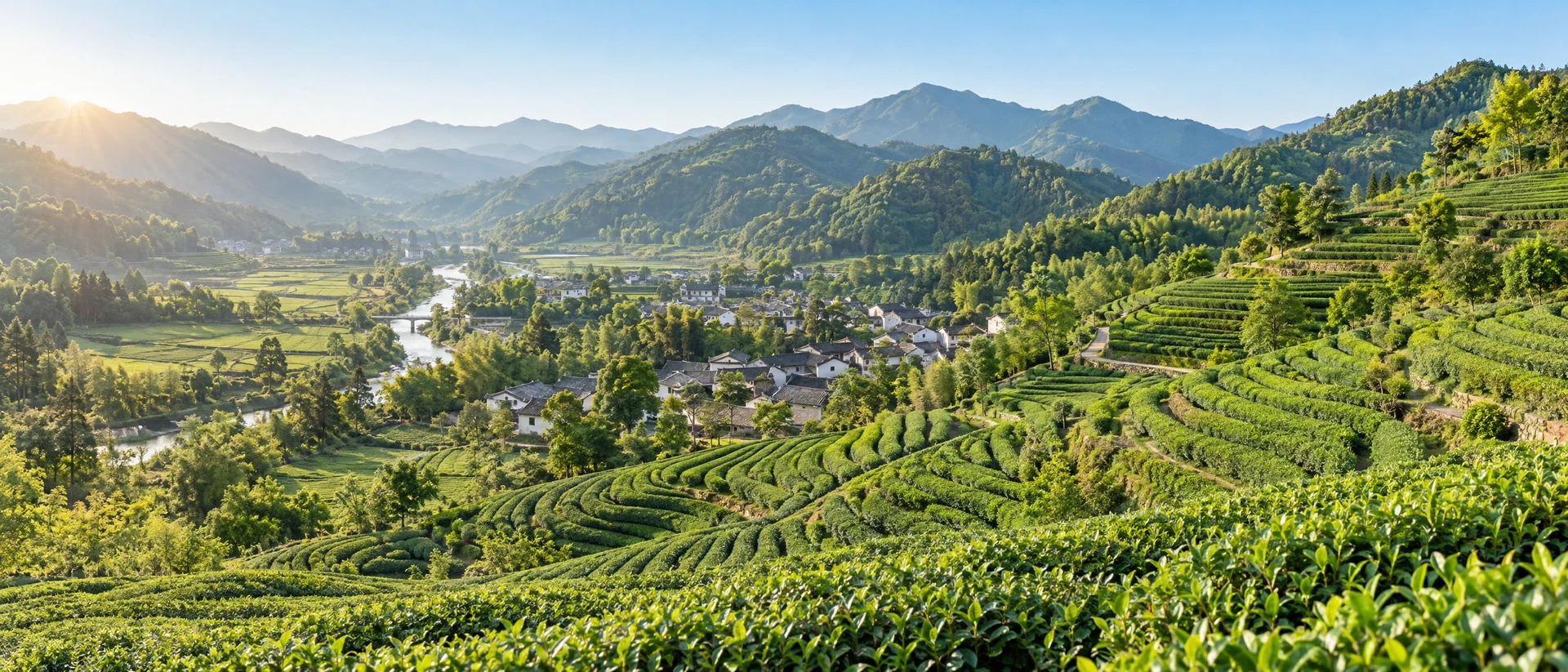 Thematic imagery
Tea for Rural Vitality: Rooting the Tea Industry in the Countryside
“Tea was a pillar of poverty alleviation here; it should now become a pillar of rural revitalisation.”
— Xi Jinping · Yanzike ecological tea garden · 22 March 2021Read the source and context
“Build prosperity and livelihoods through tea, overcome poverty here and work toward a better life; do these things well and develop the tea industry well.”
— Xi Jinping · Tea garden visit in Pingli, Shaanxi · 21 April 2020Read the source and context
From Industrial Support to Rural Revitalization
The tea industry connects land, labor, and rural development. Using tea to strengthen rural communities means more than treating tea as an industrial resource: it links tea-garden development, support for tea farmers, the transmission of tea-making skills, and long-term rural livelihoods, rooting the industry in the land and extending development through work and cooperation.
As industrial support in the poverty alleviation era gives way to rural revitalization, tea’s value reaches beyond fresh leaves and finished products. It also lies in cultivating productive capacity, local brands, and links to employment over time. By investing in tea gardens, supporting tea farmers, nurturing tea-making artisans, and connecting regional brands with cultural-tourism employment, the enterprise engages with the interdependence of industry and rural development.
Putting Industry’s Responsibility into Practice in Tea Country
Strengthening the Tea-Garden Foundation
With tea gardens as the industry’s foundation, the enterprise invests in their development, bringing the land and tea plants needed for long-term production into its development vision. This investment links cultivation with subsequent tea-making and gives sustained development of the tea industry a tangible base, grounding corporate responsibility in rural production.
Supporting Tea Farmers and Passing on Tea-Making Skills
Supporting tea farmers and nurturing tea-making artisans recognizes the labor and skill at the heart of the industry. The enterprise brings support for producers together with the cultivation of tea-making expertise, linking tea-garden work, the transmission of craft, and industrial development while honoring the accumulated labor behind tea.
Connecting Regional Brands with Cultural-Tourism Employment
Through regional tea brands and cultural-tourism employment, the enterprise connects tea’s industrial value with local identity, rural services, and jobs. Brand-building gives expression to regional tea production, cultural tourism broadens the connection between tea and the countryside, and employment links industrial development with rural livelihoods.
A Record of the Tea Industry Taking Root in Rural Communities
The roots of this undertaking
Gankeng Black Tea: Industry and Work in Tea Country
Xinhua's tea-country reporting documents black-tea production and local industry in Gankeng, Guangze, offering regional context for tea and rural development.
Read the public recordA Conversation on the Long-Term Growth of Tea and Rural Communities
Using tea to strengthen rural communities depends on lasting ties between industry and the countryside. We welcome conversations about tea-garden development, support for tea farmers, tea-making skills, regional tea brands, and links between tea, rural cultural tourism, and employment—exploring how these relate to industrial responsibility, cultural transmission, and rural development. Specific collaboration and service offerings can be discussed further.
Return to the homepage theme